
 English
 عربى
عربى Español

 English
 عربى
عربى Español
information to be updated

Submit feedback
High Temperature Resistant Inorganic Binder Suppliers
Inorganic High-Temperature Adhesive
Inorganic high-temperature adhesives, made from inorganic nanomaterials through polycondensation reactions, are specialized adhesives with remarkable properties such as:
- Low Expansion Rate: Minimizes thermal expansion.
- High Strength: Maintains strong adhesive properties.
- High-Temperature Resistance: Withstands temperatures up to 1100°C or higher.
- Water Resistance: Offers strong protection against moisture.
These adhesives provide stable bonding strength and corrosion resistance even under high temperatures. They are primarily used for bonding surfaces of high-temperature materials like glass, ceramics, and hard alloys, forming a uniform and dense protective layer that effectively shields substrates from heat damage.
Furthermore, this product is non-toxic, harmless, and non-flammable, making it an ideal green bonding material.
About
Tongxiang Hengli Chemical Co., Ltd.
Tongxiang Hengli Chemical Co., Ltd. specializes in the production of inorganic silicon products, we are China High Temperature Resistant Inorganic Binder Suppliers and
Custom High Temperature Resistant Inorganic Binder Factory, our products with more than 30 product varieties including sodium silicate, potassium silicate, lithium silicate, silica sol, potassium methyl silicate, and inorganic high-temperature resistant adhesives. We provide OEM processing, welcome to contact us to customize various moduli and concentrations High Temperature Resistant Inorganic Binder.
The company relocated as a whole to the Fengming Economic Development Zone in Tongxiang City in 2015, covering an area of 18 acres with a building area of nearly 30000 square meters. The company has one national-level technical personnel and three senior technical personnel.
Integrate product development, production, and sales! The product is widely used in industries such as electronics, clothing and papermaking, agriculture, water-based coatings, sand casting, precision casting, and refractory materials. We sincerely welcome cooperation with you to create a better future together!
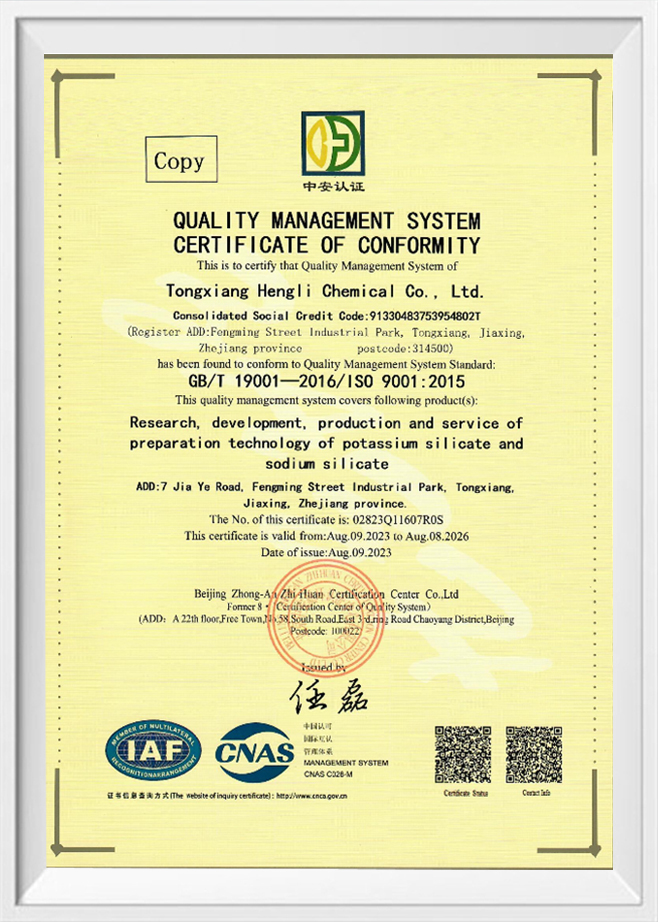
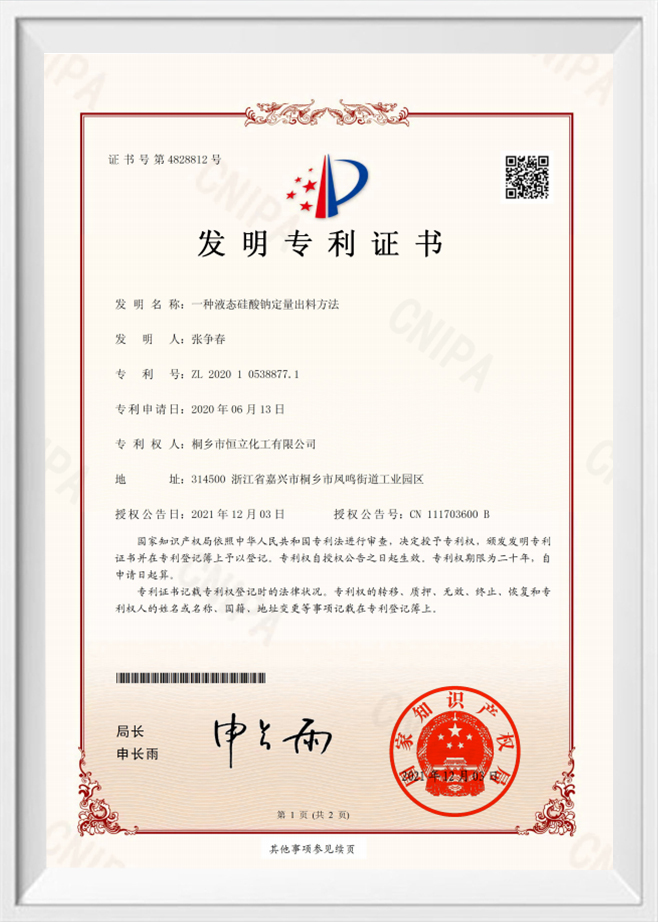
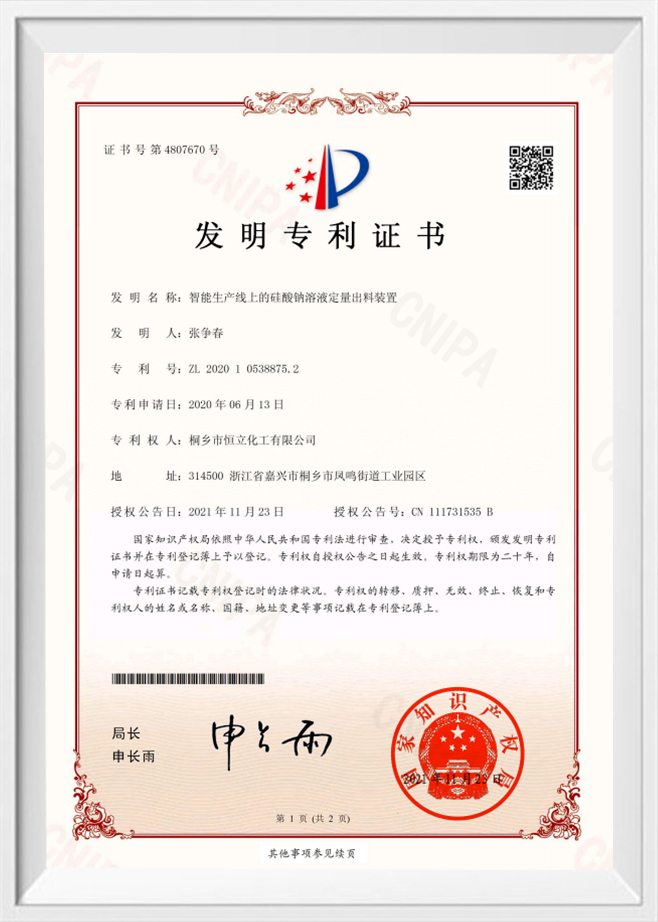
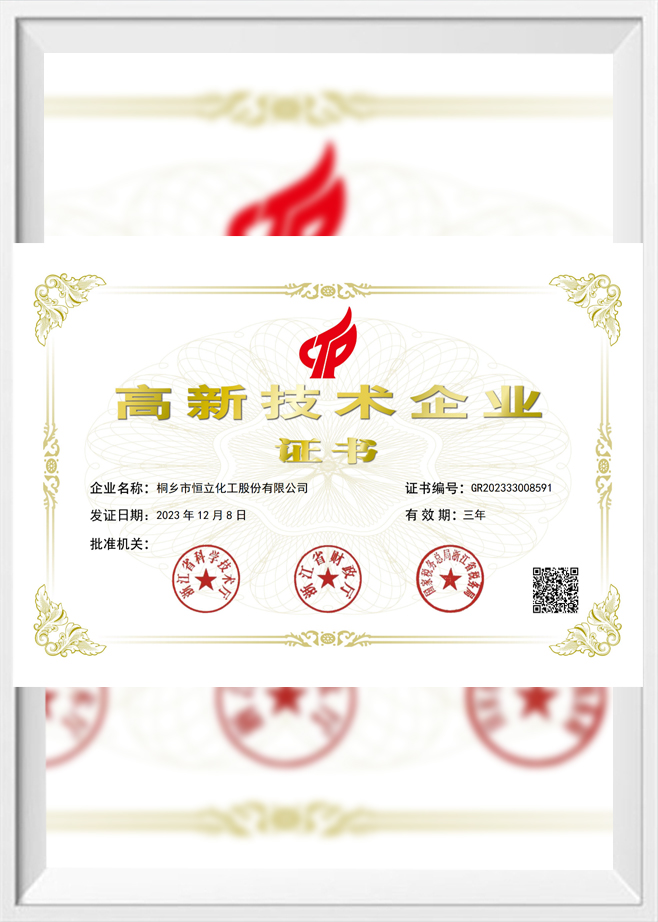
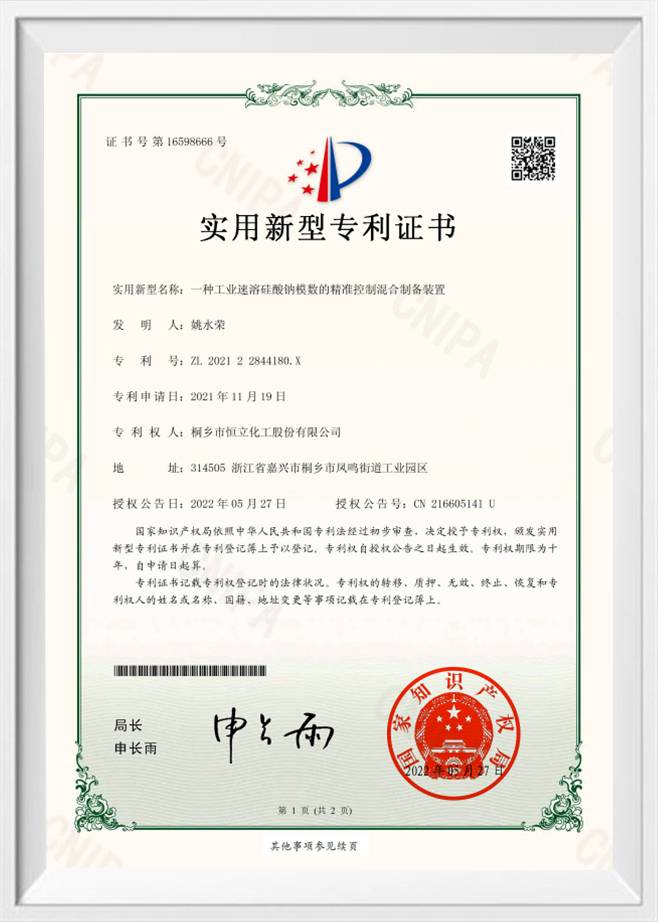
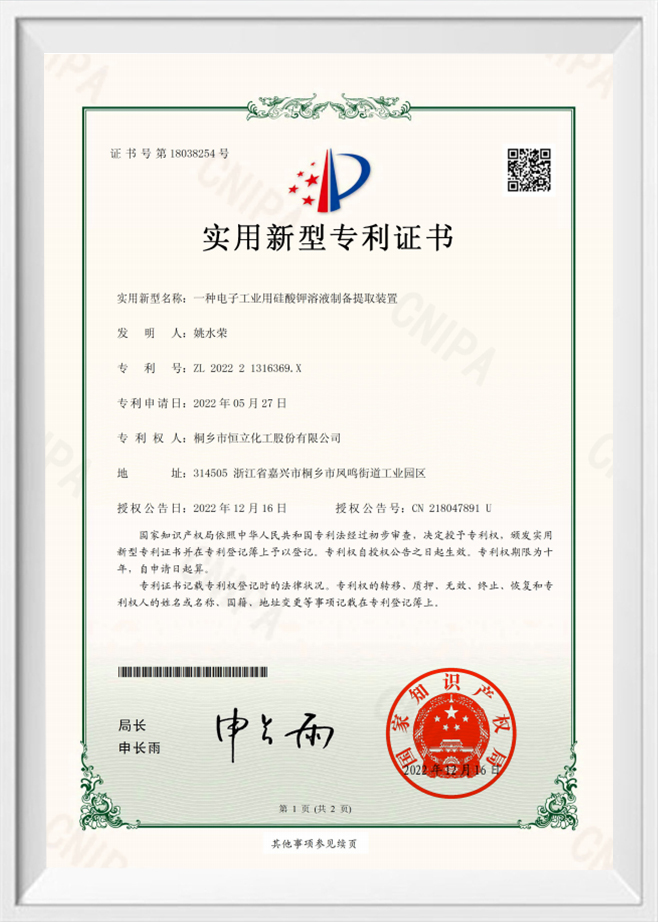
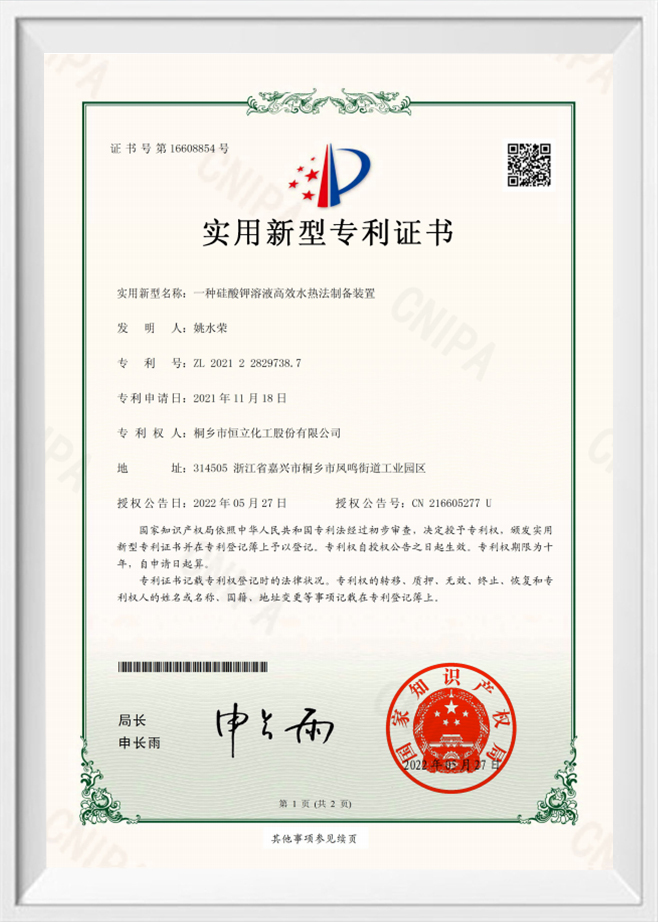
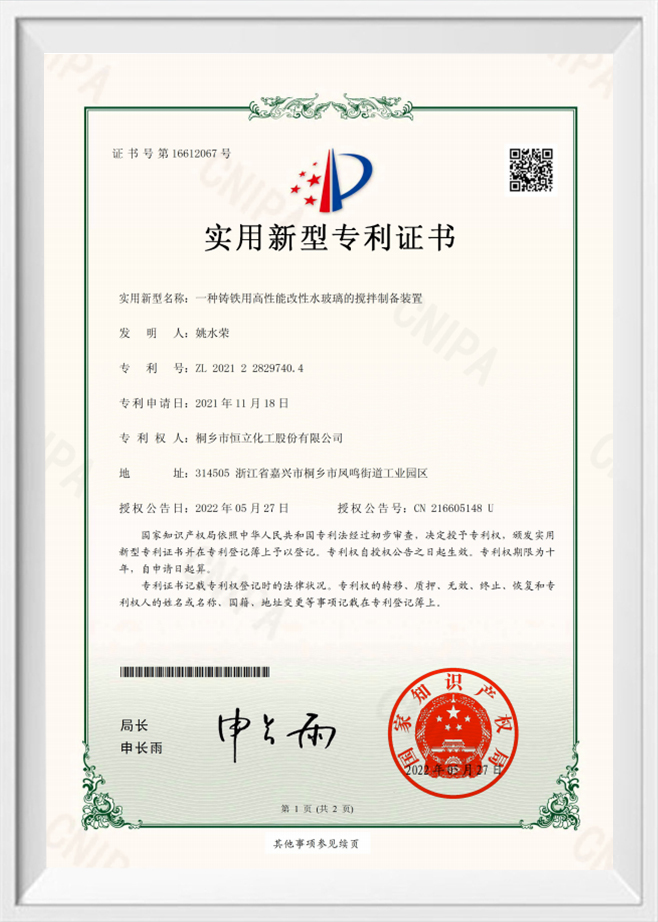
Certificate Of Honor
News
-
In the field of fire protection, the development of advanced and effective fireproofing materials is critical. One such material that has gained significant attention is sodium silicate. Also known as water glass, sodium...
READ MORE -
Introduction Silicate-based adhesives are renowned for their durability, thermal resistance, and environmental friendliness, making them an ideal choice for various industrial applications. One key ingredient that has ga...
READ MORE -
Introduction The manufacturing of potassium silicate solutions plays a pivotal role in various industries such as agriculture, construction, and chemical engineering. These solutions, primarily made by combining potassiu...
READ MORE
Message Feedback
High Temperature Resistant Inorganic Binder Industry knowledge
Why Are High-Temperature Resistant Inorganic Binders Crucial for Modern Industries?
In the rapidly advancing world of materials science, high-temperature resistant inorganic binders are playing an increasingly pivotal role in various industrial applications. These binders are essential components in many high-performance products that require both durability and heat resistance. Industries ranging from metallurgy to electronics, construction, and even energy rely on these unique materials for their efficiency, safety, and long-lasting performance.
The Science Behind High-Temperature Inorganic Binders
At their core, high-temperature resistant inorganic binders are designed to withstand extreme conditions without degrading. Unlike organic binders, which can burn or decompose at high temperatures, inorganic binders are made from materials that maintain their integrity under heat stress. These binders are typically composed of silicates, aluminosilicates, and other inorganic compounds, providing superior heat resistance, stability, and minimal expansion or contraction in response to temperature changes.
One of the most commonly used types of inorganic binders is sodium silicate, also known as water glass. Sodium silicate solutions are used as a binder in foundries, where molten metals are cast, and in the production of ceramics. These binders play a critical role in holding materials together while maintaining high thermal stability. Other compounds such as potassium silicate and lithium silicate are also utilized in specific applications, depending on the desired properties of the finished product.
The chemical structure of these materials makes them highly resistant to high temperatures, often withstanding temperatures in excess of 1000°C. This makes them indispensable in environments where the product will be exposed to intense heat, like furnaces, reactors, or engine components.
Why Is This Technology Important in Industry?
The growing demand for energy-efficient and sustainable technologies has led industries to seek materials that not only offer high performance but also contribute to environmental benefits. High-temperature resistant inorganic binders are at the forefront of these innovations, offering solutions for industries that require heat resistance while minimizing environmental impact.
In sectors like metallurgy, foundry, and ceramics, these binders are used extensively in producing refractory materials, which are crucial for processes like metal casting and smelting. Refractories, which line the interior of high-temperature furnaces, must endure the intense heat without deteriorating. Inorganic binders help create stable, durable products that are vital for maintaining the safety and efficiency of these systems.
As the demand for electronics and renewable energy technologies rises, the need for heat-resistant materials in the production of batteries, semiconductors, and heat exchangers has escalated. Here, high-temperature inorganic binders also play a crucial role in maintaining the integrity and longevity of electronic components that operate in high-temperature environments.
A key player in the field of inorganic binders is Tongxiang Hengli Chemical Co., Ltd., a company that has been leading the way in the production of high-quality inorganic binders since its establishment in 1997. Specializing in a wide range of inorganic silicon products, Hengli Chemical's offerings include sodium silicate, potassium silicate, silica sol, lithium silicate, and other high-temperature resistant adhesives.
Tongxiang Hengli Chemical Co., Ltd. stands out for its commitment to providing not only high-performance materials but also customized solutions that meet the specific needs of its customers. By producing more than 30 different types of products, the company serves diverse industries, from metalworking and construction to energy and electronics. Their high-temperature resistant adhesives, in particular, are highly regarded for their exceptional thermal stability, ensuring that they meet the stringent demands of industries that work with extreme heat.
High-temperature resistant inorganic binders are indispensable materials in modern industry. From metallurgy to electronics, these binders offer unparalleled durability and heat resistance that allow products to function effectively in extreme environments.As we look ahead, the ongoing development of these materials promises even more exciting possibilities, allowing industries to push the boundaries of what is possible.

Products
Sodium Silicate Potassium Silicate Lithium Silicate Sodium Methylsilicate Potassium Methylsilicate Silica Sol Inorganic Coatings And Binders Flooring SystemContact
Add:No. 7 Jiaye Road, Tongxiang City, Zhejiang Province, China Phone:+86-15257095913 Tel: +86-0573-88980238 Mob: +86-0573-88980238 E-mail:[email protected]
Copyright © 2024 Tongxiang Hengli Chemical Co., Ltd. All Rights Reserved.
Custom High Temperature Resistant Inorganic Binder Suppliers
