
 English
 عربى
 Español


 English
 عربى
 Español
Sodium silicate(HLNAL-3)
Cat:Sodium Silicate Liquid
Sodium silicate (sodium water glass) model HLNAL-3, as follow the national standard GB/T4209-2008 liquid-3 model pr...
See Details
Pigmented silicate coatings occupy a distinct position in the protective coatings market. Unlike organic resin systems that rely on polymer chain growth, silicate coatings cure through a sequence of water evaporation, particle packing, and inorganic network formation. The presence of pigments makes this process more complex, because pigment particles are not passive fillers. They participate physically and electrochemically in film formation and in the long-term behavior of the cured film.
For formulators and applicators, the essential question is not simply which pigment to choose, but how the selected pigments behave as the silicate binder transforms from a liquid dispersion into a rigid mineral film. Understanding the curing process at this level helps prevent defects, optimize application windows, and unlock the full potential of inorganic coatings. This article examines the chemistry of silicate binders, the influence of pigment characteristics, the main stages of curing, and the practical variables that determine final coating quality.
Silicate coating binders are water-based inorganic materials derived from alkali silicates, most commonly potassium silicate and sodium silicate. When applied and cured, they form a mineral film that bonds strongly to concrete, masonry, and other siliceous substrates. Potassium silicate is generally preferred for exterior and high-performance work because it produces a harder, less water-sensitive film. Sodium silicate offers economic advantages but is more prone to water sensitivity and efflorescence in demanding environments. This is why formulators often compare potassium and sodium silicate when designing a pigmented system.
 Potassium Silicate Binder HLKL-5 for Silicate CoatingsThis potassium silicate product from Hengli offers adjustable modulus and solids content, aligning with the discussion on binder properties. It suits exterior applications where hardness and water resistance are prioritized over open time.View Product →
The binder forms the continuous matrix in which pigment particles are embedded. The most important parameters are the silica-to-alkali ratio, commonly called the modulus, the solids content, and the viscosity. A higher modulus leads to faster drying and greater final hardness, but it can also increase brittleness and reduce the open time for application. A lower modulus gives better pigment wetting and longer working time, yet it may slow the development of water resistance. Binder selection should therefore match both the pigment package and the curing environment at the installation site.
Wetting and dispersion additives are often necessary because the surfaces of pigment particles and the silicate solution are both charged. The ionic strength of the binder changes continuously during drying, so the dispersion state must remain stable through the entire curing window. A well-stabilized pigment package reduces the occurrence of agglomerates, which act as stress concentration points in the dry film and lead to microcracking.
Pigments in silicate coatings can be grouped into three functional classes. Color pigments, such as iron oxides and mixed metal oxides, deliver stable mineral color in a highly alkaline environment. Functional pigments, including zinc dust and lamellar micaceous iron oxide, contribute to corrosion protection and barrier performance. Extender pigments, such as calcium carbonate, talc, and barium sulfate, modify packing density, cost, and surface texture.
Color pigments are not chemically passive during curing. Iron oxide particles are stable at high alkalinity, but their surface chemistry influences dispersion quality. When silicate binders are used with untreated pigments, the negative surface charge of pigment particles can interact with dissolved silicate species and cause flocculation or color streaking. Surface-treated silica or silicate pigments improve color bleed resistance by keeping pigment particles uniformly dispersed as the film dries and the electrolyte concentration rises.
Zinc dust behaves differently because it is electrochemically active. In a curing silicate film, zinc particles react with moisture and corrosion species to form zinc oxide and zinc hydroxide, which gradually fill the pores of the silicate network. This galvanic mechanism is valuable in single-coat systems designed for highly corrosive environments, where the coating must cure quickly by water evaporation and then build barrier protection over time.
Anticorrosive pigments based on phosphate chemistry release passivating species slowly, and the inorganic silicate matrix helps regulate that release. Some formulations also use organo-modified silica particles to reinforce the barrier effect, especially in powder and high-solid coating systems.
| Pigment Class | Main Function | Curing Behavior |
|---|---|---|
| Iron oxide | Color stability | Stable at high alkalinity, needs good wetting |
| Zinc dust | Cathodic protection | Forms protective corrosion products in pores |
| Micaceous iron oxide | Barrier protection | Lamellar particles align parallel to the surface |
| Calcium carbonate | Extender and cost control | Increases packing density, affects permeability |
The interaction between pigments and the silicate matrix is not limited to the curing period. During service, water that penetrates the film can partially dissolve and re-precipitate silicate species, a process that continues to densify the coating. Pigments with lamellar morphology reinforce this effect by deflecting water transport, while spherical pigments allow more direct pathways. Formulators should therefore select pigment morphology based not only on color but also on the moisture exposure expected at the installation site.
The transformation from a wet coating to a hard mineral film can be divided into six overlapping stages. Viewing them separately helps diagnose defects and refine application parameters.
The first three stages happen within minutes to hours. Water leaves the film, pigments and binder particles concentrate, and the film shrinks toward the substrate. As evaporation continues, the silicate binder becomes increasingly viscous and forms a gel. This gel stage is critical because pigment particles must remain uniformly distributed while the film still has some mobility.
The volume change during curing is one of the most overlooked sources of defects. A fresh silicate film can lose 30 to 50 percent of its wet thickness as water leaves. Pigments do not shrink, so the entire shrinkage stress must be accommodated by the binder phase. If the pigment loading is too high and the binder content too low, the film cannot accommodate this stress and cracking occurs. Maintaining the correct pigment volume concentration is therefore a central formulation principle.
The most chemically significant stage is carbonation. Carbon dioxide from the atmosphere reacts with the alkaline silicate, converting soluble alkali silicate into an insoluble silica network. Silica bridges form between binder molecules and pigment surfaces, so the coating gradually becomes water resistant, harder, and less permeable. Lithium silicate is sometimes blended into the binder system to accelerate early hardening, because its small cation and low solubility promote rapid network formation and a denser film. Unlike organic coatings that reach full properties in days, silicate coatings continue to densify for weeks and even months.
For installations that require water repellency, the binder can be modified with organosilicon compounds. In particular, potassium methylsilicate improves durability in coating formulations by adding methyl groups that lower capillary water uptake while the main inorganic network stays intact.
Four environmental and application variables have the strongest influence on the curing of pigmented silicate coatings: temperature, relative humidity, film thickness, and substrate condition.
Low temperatures slow both water evaporation and carbonation. If the film remains wet for too long, dust pickup and washout can occur. High temperatures accelerate the initial skin formation, which can lock water beneath the surface and cause mud cracking. The ideal compromise is moderate temperature with steady air movement.
Humidity works in two directions. High humidity slows evaporation and delays carbonation because the film surface remains saturated with water. Very low humidity speeds evaporation but increases the risk of pigment floating and surface crusting. Relative humidity between 40 and 70 percent is a practical working window for most pigmented silicate systems.
Film thickness is the most frequently underestimated variable. Thick films dry unevenly: the surface forms a skin while the lower portion stays wet. When the trapped water finally escapes, tensile stress develops and cracks appear. The solution is to apply thin, uniform coats and allow proper dry time between coats. Substrate porosity also matters, because porous surfaces extract water quickly and reduce the effective binder concentration at the interface.
Ventilation is an equally practical factor, especially for interior applications. Water vapor released from the film must be carried away; in a confined space, high vapor concentration slows evaporation and reduces carbonation. Cross-ventilation with dry air is preferable to stagnant air, but airflow should not be directed straight onto the wet film, which can create surface crusting.
| Variable | Ideal Range | Consequence Outside Range |
|---|---|---|
| Temperature | 15-25 C | Slow cure or surface skinning |
| Relative humidity | 40-70 % | Washout or mud cracking |
| Film thickness per coat | 60-120 microns | Cracking or weak adhesion |
| Substrate condition | Dry, clean, porous | Efflorescence or poor bond |
Most defects in pigmented silicate coatings are not caused by raw material quality but by incorrect curing conditions or improper film build. The table below lists the most common problems and their root causes.
| Defect | Typical Cause | Prevention |
|---|---|---|
| Pigment floating and streaking | Insufficient wetting, rapid skinning | Improve dispersion, slow the drying rate |
| Surface dusting | Low binder content, excessive humidity | Adjust pigment-to-binder ratio, control humidity |
| Mud cracking | Thick film, fast surface drying | Reduce film thickness, apply multiple thin coats |
| Efflorescence | Excess soluble alkali migrating to the surface | Lower alkali binder content, avoid early moisture exposure |
| Poor adhesion | Non-porous substrate, dust or oil contamination | Proper surface preparation and priming |
Efflorescence deserves special attention in pigmented systems because white deposits are easily confused with pigment fading. The key difference is that efflorescence appears as a crust that can be partially removed, whereas pigment fading changes the color of the film itself. Monitoring the first days of curing helps distinguish these two conditions early.
In addition, the interaction between pigment and binder influences early mechanical strength. A film with high pigment loading may pass visual inspection but fail adhesion testing because the binder is insufficient to bridge all pigment particles. Formulators can identify such problems by preparing drawdown panels at three different pigment volume concentrations instead of testing only the final formula.
A structured quality control program should cover both the wet coating and the cured film. The following tests are commonly used for pigmented silicate coatings.
Because pigments directly affect curing, the quality control schedule should be aligned with the pigment system. For example, a coating containing high levels of lamellar micaceous iron oxide will develop barrier properties later than a coating made with fine spherical pigments, even if both reach the same final hardness. Comparing test results at multiple cure ages, rather than at a single point, gives the clearest picture of performance.
Routine curing monitoring is also useful. Simple tests, such as measuring the hardness evolution at 1, 3, 7, and 28 days, provide a curve that can be compared with a reference standard. A deviation from the expected curve indicates that either the binder chemistry or the curing environment has changed. This approach turns curing behavior into a measurable quality indicator rather than a matter of visual judgment.
Pigment particles reduce the volume fraction of binder exposed to atmospheric carbon dioxide and create a more tortuous path for water escape. As a result, carbonation and network formation progress more slowly. Pigment chemistry also matters; alkaline or hygroscopic pigments can retain water and prolong the evaporation stage.
Most organic pigments are not stable at high alkalinity and may fade or decompose during curing. Inorganic pigments such as iron oxides and mixed metal oxides are recommended because they maintain color stability and do not interfere with the siloxane network formation.
Finer pigments increase the specific surface area, which can slow the drying rate and raise the binder demand. Coarser pigments allow faster water release but may settle during storage and cause a rougher film surface. A balanced particle size distribution helps achieve dense packing without excessive viscosity.
In typical conditions of 15 to 25 degrees Celsius and moderate humidity, the film needs at least 12 to 24 hours to develop initial water resistance. Thick films and cool weather extend this period. The safest practice is to protect the coating from liquid water for the first 48 hours.
The curing of pigmented silicate coatings is a coordinated process in which chemistry, physics, and application technique must work together. Pigments are active participants: they alter the drying profile, influence carbonation, control the final pore structure, and determine the appearance and protective character of the film.
Successful formulations start with the right binder grade and a pigment package that is chemically compatible with the alkaline silicate environment. Successful applications continue with disciplined film thickness control, appropriate humidity and temperature management, and patient protection of the film during its first days of maturation.
When all of these conditions are met, pigmented silicate coatings deliver the performance that mineral binders are known for in both architectural and industrial environments
Sodium silicate (sodium water glass) model HLNAL-3, as follow the national standard GB/T4209-2008 liquid-3 model pr...
See Details
Sodium silicate (sodium water glass) model HLNAL-4, as follow the national standard GB/T4209-2008 liquid-4 model pr...
See Details
Sodium silicate (sodium water glass) model HLNAL-5, as a super high modulus (3.8-4.0) product produced beyond the n...
See Details
Powdered sodium silicate (model HLNAP-2 modulus 2.4±0.1) is a product made of liquid water glass by drying and spra...
See Details
Liquid Potassium Silicate, Model HLKL-3 (Modulus 3.1-3.4), Potassium silicate solution has better appearance and tr...
See Details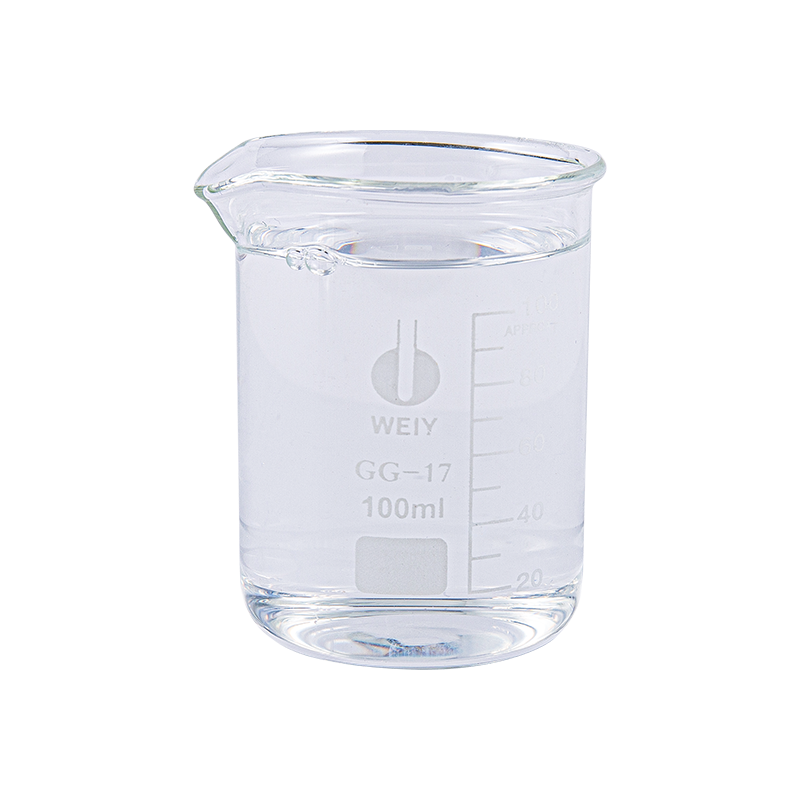
Liquid Lithium Silicate, Model HLLL-1, As an important member of the silicate family, lithium silicate does have a ...
See Details
Products
Sodium Silicate Potassium Silicate Lithium Silicate Sodium Methylsilicate Potassium Methylsilicate Silica Sol Inorganic Coatings And Binders Flooring SystemContact
Add:No. 7 Jiaye Road, Tongxiang City, Zhejiang Province, China Phone:+86-15257095913 Tel: +86-0573-88980238 Mob: +86-0573-88980238 E-mail:[email protected]