
 English
 عربى
عربى Español

 English
 عربى
عربى Español
Sodium silicate(HLNAL-1)
Cat:Sodium Silicate Liquid
Sodium silicate (sodium water glass) model HLNAL-1, as follow the national standard GB/T4209-2008 liquid-1 model pr...
See Details
Sodium silicate, commonly known as water glass, is a water-soluble alkali silicate used across coatings, adhesives, foundry binders, concrete sealers, and inorganic powder production. In almost every process, the liquid grade must be converted into a solid film, a bonded layer, or a dry powder by removing water. Air drying, in which a moving stream of air absorbs moisture from the silicate surface, is the most widely used method because it is simple, energy-efficient, and compatible with continuous production lines.
The two variables that determine success are air drying time and drying temperature. Set them correctly, and the dried silicate forms a clear, hard, water-resistant network. Set them poorly, and the result is skinning, cracking, foaming, or a sticky under-cured mass. This guide explains how air drying time and temperature affect sodium silicate, how to choose the right parameters, and how to correct defects when a drying schedule goes wrong.
Technical-grade sodium silicate solutions normally contain 30 to 50 percent dissolved solids. During air drying, water leaves in two stages. Free water, which occupies the space between dissolved silicate chains, evaporates first under the vapor-pressure difference between the wet layer and the surrounding air. Bound water, which is loosely associated with sodium ions and silanol groups, escapes more slowly and requires higher temperature or longer time. A complete drying curve therefore has a fast constant-rate stage followed by a long falling-rate stage.
At 20 to 40 degrees C, evaporation is gentle, and thin films dry without stress, but slowly. Between 40 and 90 degrees C, drying becomes practical for production because most free water leaves in this range. Above 100 degrees C, bound water is driven off, and the silicate network condenses into an insoluble, harder matrix. Industrial air dryers rarely run above 150 degrees C for simple film drying because the risk of surface sealing grows quickly at higher temperature. For thicker parts, a stepwise schedule is far safer than a single high-temperature setting.
As a working benchmark, a sodium silicate film is tack-free when residual moisture falls below about 10 percent, but a hard, water-resistant finish requires holding the target temperature until the condensation reaction is substantially complete.
Temperature also accelerates the condensation of silanol groups into siloxane bonds, producing a denser network that improves hardness and water resistance. Yet the same speed creates a known problem: when the outer skin dries and shrinks faster than the interior, it stiffens, blocks vapor escape, and eventually cracks or blisters as trapped steam expands. This is why time and temperature must always be treated together rather than independently.
The correct drying window changes with solids content, layer thickness, and the silica-to-alkali ratio of the selected grade. Sodium silicate liquids are supplied in a range of concentrations and ratios, so confirm the actual water content of your grade before setting a dryer profile. This is especially important when one production line handles several formulations, because a small change in solids content can shift the recommended drying time by 20 to 30 percent.
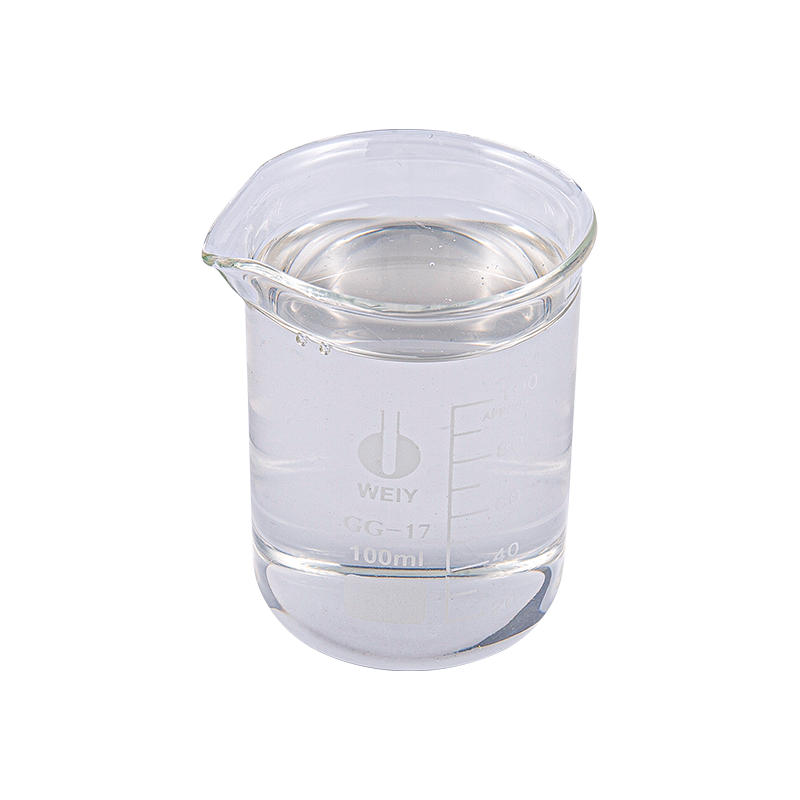 Hengli HLNAL-1 Liquid Sodium Silicate in Multiple Pack SizesThis liquid sodium silicate grade suits drying-process adjustments discussed above, with transparent viscous form and 20L to 1000L packaging options. It is a practical choice for controlling water loss and film uniformity in industrial dryers.View Product →
Five process parameters determine how fast a sodium silicate layer loses water and how uniform the final dry film becomes. The table below summarizes their effect and gives practical starting values for industrial dryers.
| Parameter | Effect on drying | Practical guideline |
|---|---|---|
| Solids content | Higher solids means less water to remove | 35 to 50 wt% liquid; keep above 45% for thick films |
| Silica-to-alkali ratio | Higher ratio increases viscosity and slows internal water migration | 2.0 to 3.5 typical; 2.6 to 3.0 for coating films |
| Wet layer thickness | Doubling thickness can triple or quadruple drying time | Keep single passes under 0.5 mm |
| Air temperature | Higher temperature raises evaporation but also skinning risk | 50 to 80 C first stage; 100 to 150 C final cure |
| Relative humidity | Above 70 percent RH evaporation nearly stops | Maintain 40 to 60 percent RH in the dryer |
| Air velocity | Moving air removes the saturated boundary layer | 0.5 to 2 meters per second across the surface |
Among all these variables, wet film thickness has the strongest influence. Evaporation happens only at the exposed surface, so water from deeper layers must diffuse upward through the partially dried network. Each time the initial wet-film thickness is doubled, total drying time grows by a factor of roughly three to four. This explains why thin coatings reach a dry state in minutes, while multi-centimeter castings and repair layers need hours, even inside a forced-air dryer.
Recommended drying windows vary because the required final state of the dried silicate also varies. The values below are realistic starting points for industrial equipment; confirm them with small trials before full production.
| Application | Drying temperature | Drying time | Remarks |
|---|---|---|---|
| Concrete sealer film | 20 to 35 C | 1 to 3 h tack-free; 24 h full cure | Thin coat, low solids liquid |
| Wood or paper adhesive bond | 40 to 80 C | 10 to 60 min | Pressure improves contact |
| Corrosion-resistant primer on steel | 80 to 150 C | 15 to 45 min | Staged ramp recommended |
| Foundry core binder | 200 to 300 C core-box air | 30 to 150 s | Thin sand sections only |
| Refractory or cast shape | 50 to 90 C then 120 to 180 C | 2 to 12 h | Stepwise heating prevents cracking |
| Powder from liquid | 250 to 350 C inlet; 90 to 120 C outlet | Seconds | Atomized droplets in air |
The lower end of each temperature range suits humid conditions, thicker layers, or high-viscosity grades, while the upper end should be reserved for thin layers with forced air movement. For adhesive lines, bond strength develops most quickly during the constant-rate drying stage, and a practical review of using liquid sodium silicate as an adhesive explains how drying conditions affect joint performance in real production.
Concrete sealing and dust proofing depend on a fully dried, well-adhered silicate film that has reacted with calcium compounds in the substrate. Flooring-grade curing agents are formulated with controlled solids and viscosity so that a single coat dries evenly within a realistic construction window; adjusting the drying schedule to match ambient humidity is often the difference between a glossy sealed floor and a cloudy patchy one.
The chart below compares the total air drying time of a thin film and a thick layer at three common temperatures. The data assume forced air movement of about 1 meter per second across the surface, relative humidity below 50 percent, and typical liquid sodium silicate at 40 percent solids.
Three practical conclusions follow from the chart. First, raising the air temperature from 60 to 120 degrees C reduces drying time by roughly 70 to 90 percent depending on layer thickness. Second, the time saved by each additional 10 degrees C becomes smaller at higher temperatures because the migration of bound water, not surface evaporation, becomes the limiting step. Third, the chart gives the minimum time to remove water; it does not guarantee defect-free drying, because heating rate, humidity, and part geometry also control crack formation.
Instead of guessing, establish the correct drying window for a specific sodium silicate grade with a simple test procedure. The steps below work for films, bonded assemblies, and small cast shapes.
For air-dried powder, use the same principle but measure continuously at the dryer outlet. A change of 5 degrees C at the outlet temperature usually corresponds to a shift of 0.1 to 0.3 percent in residual moisture. Target values for dry sodium silicate powder are typically 0.5 to 2 percent residual moisture, depending on the intended application.
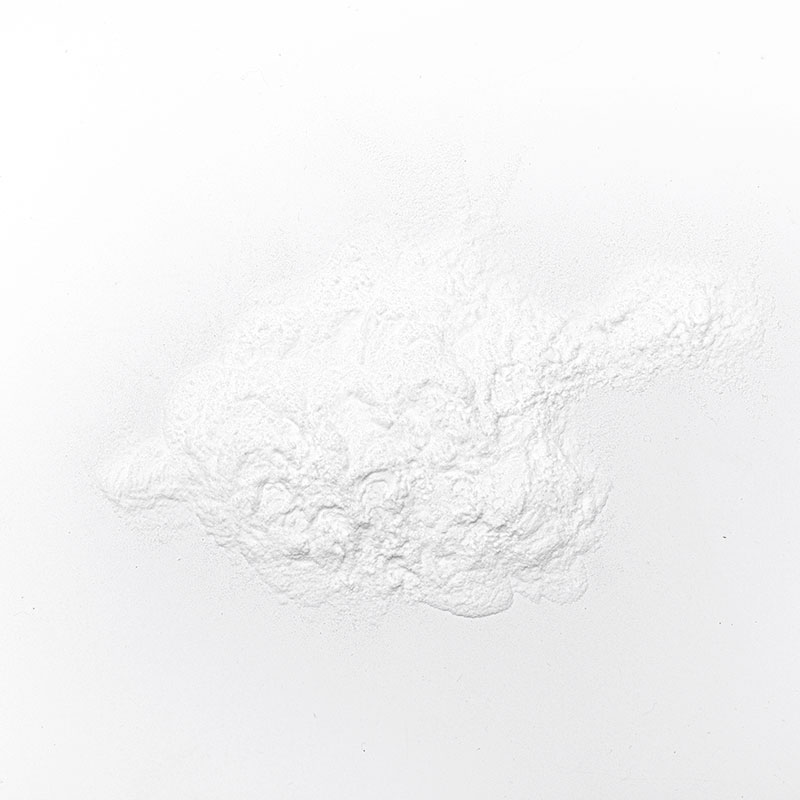 Hengli HLNAP-1 Powdered Sodium Silicate in 25kg BagsWhite powder form of sodium silicate with 25kg woven or kraft paper packaging, suitable for applications needing controlled residual moisture. The description covers dry storage and handling, matching the context of monitoring dryer outlet conditions for powder.View Product →
When monitoring a dryer, place temperature sensors close to the silicate surface instead of relying on the dryer display. Thick substrates remain 20 to 40 degrees C colder than the air stream for the first several minutes, and a sensor mounted in the exhaust duct overestimates the actual drying rate at the product surface.
Most drying defects trace back to one of three mistakes: drying too hot, increasing temperature too early, or operating the dryer with saturated air and no exhaust. Recognizing the cause makes it easier to correct the schedule before rejecting a full batch.
| Defect | Typical cause | Corrective action |
|---|---|---|
| Surface skinning | Air temperature above 90 C while the layer is still wet | Reduce first-stage temperature; keep air moving |
| Cracking | Shrinkage stress from rapid heating of the surface | Add a holding stage at 50 to 60 C; apply thinner coats |
| Foaming or pinholes | Steam trapped under a sealed surface | Lower the final temperature increase; reduce film thickness |
| White bloom on dried film | Sodium carbonate formed in humid air during long drying | Shorten drying time; keep humidity below 60 percent RH |
| Sticky under-cured film | Drying time too short or relative humidity above 70 percent | Extend time or raise temperature by 10 to 20 C |
| Blisters on metal substrate | Vapor pressure after the surface has hardened | Preheat substrate to 60 to 80 C; use two thin passes |
If film thickness cannot be reduced, split the application into two or three thin passes and dry each pass until tack-free before applying the next. This single change prevents most foaming and blister defects because it keeps vapor generation low enough for air to carry it away. In humid climates, schedule drying for the early morning or late evening hours when the ambient air is driest.
The following practices apply across coating, bonding, and powder drying processes and can be implemented without major equipment changes.
Drying behavior is grade-specific. A high-modulus silicate forms a more viscous wet layer and dries according to a different time-temperature curve than a low-modulus grade at the same solids content. When planning a new line, ask for drying recommendations from your sodium silicate producer before fixing cycle times.
A structured approach to drying sodium silicate, matching temperature, time, airflow, and humidity to the specific grade and geometry, is the fastest route to consistent product quality. Once the drying curve for each product is mapped, the process can be scaled to larger dryers with confidence.
For thin films, 60 to 80 degrees C is usually the best balance between speed and quality. For thick layers, start at 50 to 60 C, hold for one to two hours, then raise the temperature gradually to 120 to 150 C for the final cure. Ambient drying at 20 to 30 C is possible but takes several hours and requires low humidity.
A 0.2 to 0.3 mm film becomes tack-free in about one to three hours at 25 to 35 C, and in roughly 15 to 45 minutes at 80 to 100 C. A layer several millimeters thick can need 2 to 12 hours even with heated air because water must diffuse from the interior to the surface.
Cracking usually happens when the surface dries much faster than the interior, creating shrinkage stress. Reduce the air temperature during the first stage, apply a thinner coat, or raise the humidity slightly to slow surface drying.
No. Temperatures above 150 C can trap steam under a hardened surface and cause blistering or foaming. In powder production, inlet air can be 250 to 350 C, but the outlet temperature that particles actually experience is held at 90 to 120 C to prevent melting or fusion.
Yes, for thin coatings and small parts. Keep relative humidity below 60 percent and provide continuous airflow. Full curing typically takes about 24 hours. For production volumes, heated air at 40 to 60 C is recommended to keep cycle times practical.
Sodium silicate (sodium water glass) model HLNAL-1, as follow the national standard GB/T4209-2008 liquid-1 model pr...
See Details
Sodium silicate (sodium water glass) model HLNAL-5, as a super high modulus (3.8-4.0) product produced beyond the n...
See Details
Sodium silicate (sodium water glass) model HLNAL-6, as beyond the national standard GB/T4209-2008 standard producti...
See Details
Powdered sodium silicate (model HLNAP-1 modulus 2.0±0.1) is a product made of liquid water glass by drying and spra...
See Details
Powdered sodium silicate (model HLNAP-4 modulus 3.4±0.1) is a product made of liquid water glass by drying and spra...
See Details
Liquid Lithium Silicate, Model HLLL-1, As an important member of the silicate family, lithium silicate does have a ...
See Details
Products
Sodium Silicate Potassium Silicate Lithium Silicate Sodium Methylsilicate Potassium Methylsilicate Silica Sol Inorganic Coatings And Binders Flooring SystemContact
Add:No. 7 Jiaye Road, Tongxiang City, Zhejiang Province, China Phone:+86-15257095913 Tel: +86-0573-88980238 Mob: +86-0573-88980238 E-mail:[email protected]